واژه های تصادفی
واژه های مجاور
Slipping
Slipping
توضیح فارسی
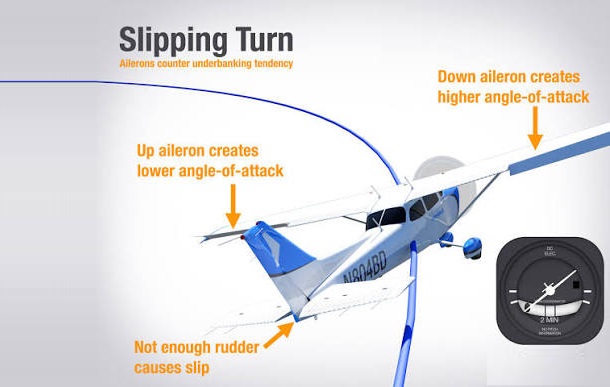
لغزش (Slipping) حالتی از پرواز نامتعادل است که در آن هواپیما ضمن حرکت به سمت جلو، بدنه آن مقداری به پهلو نیز حرکت میکند. در حین این نوع لغزش ، دماغه هواپیما به سمت بیرون منحنی گردش متمایل است (برخلاف Skidding که دماغه به سمت داخل منحنی گردش متمایل میشود). توپ هماهنگکننده (Turn Coordinator Ball) در حالت Slipping به سمت بالی که پایینآمده حرکت میکند.
Slipping میتواند در دو حالت اصلی رخ دهد:
۱. در حین گردش: زمانی که خلبان به میزان کافی سکان در جهت گردش اعمال نکند (یا سکان مخالف بزند)، نرخ گردش هواپیما از زاویه بنک(Bank) عقب میافتد. این حالت معمولاً ناشی از تکنیک ضعیف یا عدم توجه خلبان است.
۲. در پرواز مستقیم: Slipping همچنین میتواند به دلیل عوامل خارجی مانند باد جانبی، تلاطم یا ورودیهای نادرست ایلرون/سکان در طول پرواز تراز رخ دهد.
Description
Slipping is a condition of uncoordinated flight in which the aircraft, while moving forward, also has its fuselage moving somewhat sideways. During this type of slip, the nose of the aircraft tends toward the outside of the turning curve (unlike skidding, where the nose tends toward the inside of the turning curve). The turn coordinator ball, in a slipping condition, moves to the lower side — in other words, toward the lowered wing.
Slipping can occur in two primary scenarios:
During turns: When the pilot does not apply enough rudder in the direction of the turn (or applies opposite rudder), the aircraft's rate of turn falls behind its bank angle. This is often due to poor technique or lack of attention.
In straight flight: Slipping can also occur due to external factors such as crosswind, turbulence, or incorrect aileron/rudder inputs during level flight.